
In Indian politics, rhetoric often grabs headlines, but a recent controversy triggered by the phrase “Cockroach Janata Party” has really taken off and pulled in a lot of attention. After that statement went around, a rush of accusations and counteraccusations kicked up inside political circles. From social media platforms to television debates, the matter became, sort of, an everywhere discussion.
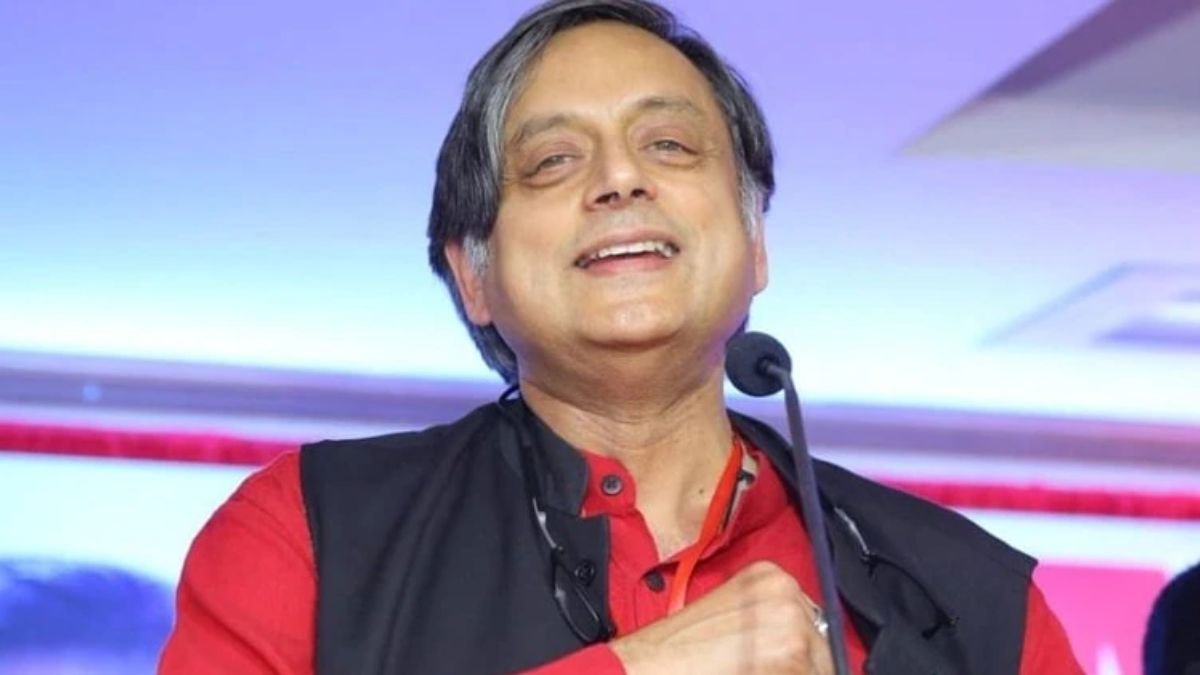
In the middle of all this, Shashi Tharoor gave a key piece of advice to the opposition parties, stressing that keeping decorum in language is absolutely necessary in any political skirmish. He thinks, yes, criticism belongs in democracy, but slipping into personal jabs and derogatory terms just makes the political air even more polluted and tense.
So what advice did Shashi Tharoor give to the Opposition?
Shashi Tharoor said the opposition should not depend purely on emotional reactions and should instead concentrate on the tangible issues that connect with people in real life. He suggested that if the opposition keeps getting tangled in controversial talk and also those social media back-and-forth exchanges, then its core message to the public can get watered down. As per Tharoor, matters like unemployment, inflation, education, healthcare, and economic inequality are far more consequential, and the opposition should strongly and consistently push these exact concerns.
His statement comes at a time when the standards of linguistic decorum among political parties appear to be steadily eroding. A lot of political analysts think that with this statement, Tharoor was sort of trying to tell the opposition, indirectly, that putting forward a positive agenda—instead of doing the whole negative politics thing—is much more useful to reach the electorate.
Why did the ‘Cockroach Janata Party’ remark become such a huge problem?
The instant the phrase “Cockroach Janata Party” was said, it really kicked off a big backlash across social media. People backing the ruling party said it was derogatory and not okay. At the same time, some opposition leaders framed it as a symptom of political irritation. Yet, the whole row also brought up a bigger concern, like—are we watching the tone of discourse in Indian politics steadily slide down?
Political experts argue that even if this kind of wording tends to produce quick headlines, in the end it weakens the substance of democratic discussion. The public, these days, seems to expect leaders to bring solid policies and practical answers, not just keep running an endless loop of allegations and counter-allegations. Because of that, Tharoor’s remark is being viewed by some as fairly tempered and grown up.
The Biggest Challenge Facing the Opposition
The opposition in India is currently grappling with a multitude of challenges. On one hand, it must contend with the ruling party’s robust electoral strategy; on the other, maintaining internal unity within its own ranks is no easy feat. In such an atmosphere, controversial statements tend to divert attention away from the real issues. Emphasizing this very point, Shashi Tharoor stated that the opposition must make its politics more responsible and issue-based in order to win the public’s trust.
He also indicated that merely criticizing the government is not sufficient. The opposition must also present alternative policies and a clear vision to the public. This, indeed, constitutes the true strength of a democracy.
The Growing Impact of Social Media on Politics
In today’s era, any political statement can go viral within a matter of minutes. The “Cockroach Janata Party” controversy, too, spread rapidly thanks to social media. Millions of people took to Twitter, Facebook, and YouTube to express their opinions on the matter. While some hailed it as an exercise in freedom of expression, many others deemed it a violation of political decorum.
Experts suggest that social media has rendered politics more aggressive. Leaders face constant pressure to make statements that are likely to go viral. However, this very trend often undermines serious political discourse. Tharoor’s message is considered significant in this context, as he has underscored the necessity of restraint and serious, substantive politics.
Will the Opposition Alter Its Strategy?
Following Tharoor’s counsel, the question is still there: will the opposition truly shift its strategy, or is it just a surface thing? Over the last few years, opposition parties have raised quite a few issues against the government, but a lot of times their core messages get blurred by spicy or otherwise controversial statements, like people don’t quite hear the main point. If the opposition tunes in more sharply to the everyday concerns of the public and keeps a balanced tone in its rhetoric, it can reach people much more effectively, not only loudly.
Political analysts also suggest that in the upcoming elections, the most powerful tools will not be mere talk but credibility and concrete policies. In that light, Shashi Tharoor’s advice is being treated as a key indicator for the opposition.
Why is decorum in language essential inside a democracy?
Democracy isn’t only a way to win elections; it is also a contest of ideas and a kind of dialogue. When political parties sling derogatory language at each other, it does not stop at the halls of power; it spills into society too. It encourages division and a slow but steady rise in acrimony among the public. So the responsibility of political leaders becomes even heavier; they have to express their views with energy but still keep within the standard norms of decorum.
Shashi Tharoor has been known for years for statements that are measured and impactful. Even in all this debate and noise, his response has been quoted by many as a good illustration of political maturity, and honestly, that seems to matter.
Conclusion
The “Cockroach Janata Party” controversy has sparked a new debate in Indian politics regarding the standards of language and discourse. Amidst this entire controversy, the advice Shashi Tharoor offered to the opposition serves not merely as a political response but also as a reminder of democratic values. He clearly signaled that the public now seeks solutions to serious issues, rather than mere aggressive rhetoric. In the times to come, it will be interesting to observe whether political parties grasp this message and steer their politics in a more responsible direction.
FAQs
Q1. What did Shashi Tharoor say about the controversy?
A. Shashi Tharoor advised the opposition to focus on public issues instead of controversial remarks.
Q2. Why is the ‘Cockroach Janata Party’ comment controversial?
A. The phrase sparked political outrage because many people considered it offensive and inappropriate in democratic debate.
Q3. What message did Tharoor give to opposition parties?
A. He urged opposition leaders to maintain political dignity and concentrate on issues like inflation and unemployment.
Q4. How did social media react to the controversy?
A. Social media users were divided, with some criticizing the remark while others defended it as political expression.
Q5. Why is this controversy important in Indian politics?
A. The issue has restarted discussions about political language, public discourse, and responsible leadership in India.
