
Issues such as freedom of expression, the accountability of social media platforms, and peaceful protests are once again at the center of public discourse. Recently, the Delhi High Court sent a significant message by ordering the restoration of the X (formerly Twitter) account of ‘Citizens for Justice and Peace’ (CJP). Meanwhile, Senior Advocate Dipke has expressed serious concern regarding the ongoing hunger strike by social activist and environmentalist Sonam Wangchuk.
Although these two events pertain to different subjects, both are deeply linked to civil rights, democratic values, and constitutional freedoms. At a time when the role of digital platforms and public movements is constantly expanding, the responses from both the judiciary and society hold immense significance.
Why did the Delhi High Court’s ruling become a topic of discussion?
The matter reached the Delhi High Court after ‘Citizens for Justice and Peace’ (CJP) claimed that its X account had been suspended without adequate justification. The organization argued that social media is no longer merely a medium for communication; it has evolved into an effective platform for fostering social awareness, raising issues of public interest, and disseminating information to the masses. Consequently, the sudden suspension of an organization’s account impacts both its right to freedom of expression and its capacity for public outreach.
During the hearing, the court emphasized that any action taken against an account by a digital platform must be backed by clear and transparent reasons. The court indicated that decisions made by digital platforms cannot be entirely arbitrary, particularly when they affect public discourse and democratic participation. Following this, the court directed the restoration of the CJP’s X account—a move being hailed as a significant decision in the realm of civil rights.
The evolving significance of social media and freedom of expression
Over the past few years, social media platforms have emerged as the most effective medium for citizens, journalists, social organizations, and activists to voice their views. For any organization or individual, platforms like X, Facebook, and other digital spaces are not merely tools for publicity; they have become vital instruments for public engagement, information sharing, and advancing social campaigns.
Who is CJP, and why is its role considered significant?
Citizens for Justice and Peace (CJP) is an organization dedicated to addressing issues related to human rights, justice, equality, and constitutional values. The organization has consistently played an active role through legal aid, public interest litigation (PIL), and social awareness campaigns.
Growing concern over Sonam Wangchuk’s hunger strike
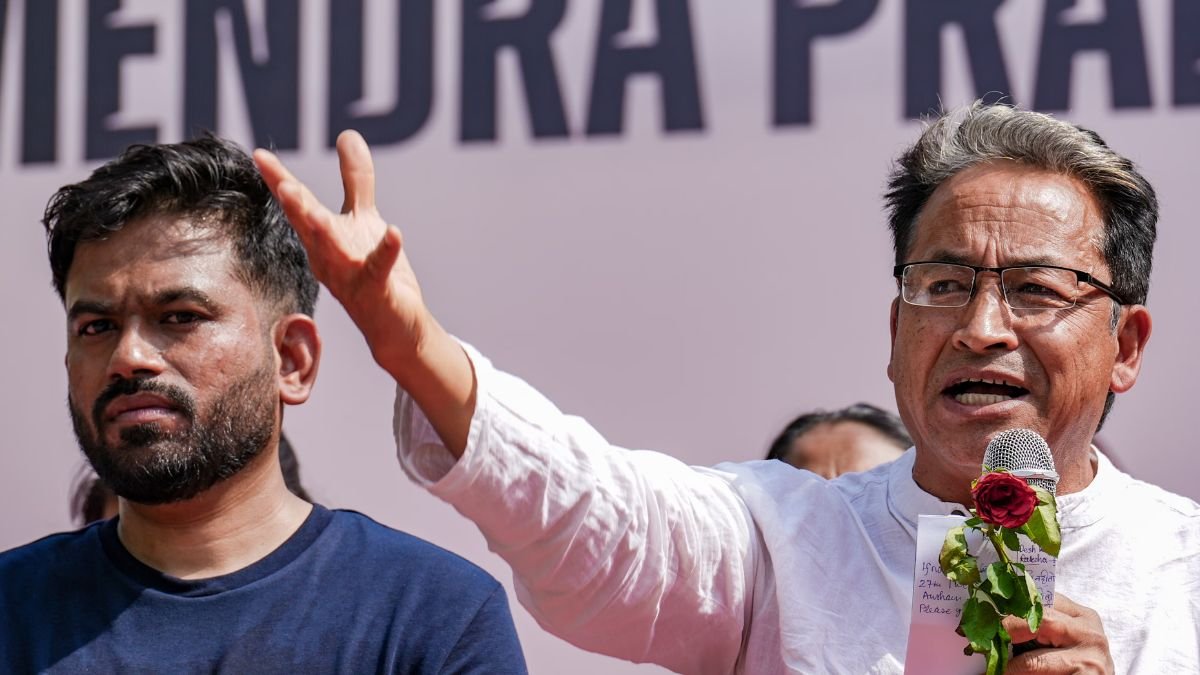
Meanwhile, the hunger strike by renowned engineer, education reformer, and environmental activist Sonam Wangchuk continues to draw significant attention. He has long been raising his voice on various issues concerning Ladakh, including environmental conservation, the rights of local residents, and demands for the region’s development.
The Tradition of Hunger Strikes and Democratic Protest
Hunger strikes are not new to India; they have served as a significant medium of peaceful protest from the days of the freedom movement to the present era. Many prominent leaders, including Mahatma Gandhi, resorted to fasting as a form of non-violent protest. However, in contemporary times, the health risks associated with prolonged hunger strikes have become far more severe.
The Broader Democratic Message of Both Events
At first glance, the restoration of the CJP’s X account and Sonam Wangchuk’s hunger strike might appear to be unrelated events, yet both convey a shared message. On one hand, there is the issue of freedom of expression on digital platforms; on the other, there is the right to peaceful protest. The Indian Constitution grants citizens the right to voice their opinions and register dissent in a democratic manner.
What Lies Ahead?
Following the Delhi High Court’s order, the CJP’s X account is set to be reactivated, enabling the organization to share its campaigns and information just as before. This development has also raised hopes that social media platforms will adopt more transparent procedures when taking action against accounts in the future.
Conclusion
The restoration of CJP’s X account by the Delhi High Court and the concerns raised regarding Sonam Wangchuk’s hunger strike underscore the importance of democratic rights, freedom of expression, and peaceful protest in India. In the digital age, social media has emerged as a key medium for civic discourse; therefore, transparency and impartiality are essential in any action taken regarding it.
Furthermore, the strength of a democracy lies in resolving issues of public interest through dialogue, sensitivity, and adherence to constitutional values. Future developments in both these matters could prove significant not only for the parties involved but also for the future of civil rights and democratic processes in the country.
FAQs
Q1. Why did the Delhi High Court restore CJP’s X account?
A. The Delhi High Court ordered the restoration of CJP’s X account after hearing concerns regarding its suspension and the need for a fair process.
Q2. Why is Sonam Wangchuk’s hunger strike making headlines?
A. Sonam Wangchuk’s hunger strike has drawn attention due to concerns over his health and the issues he is raising through the peaceful protest.
Q3. What is the significance of this case?
A. The case highlights important issues related to freedom of expression on social media and the right to peaceful democratic protest.
