
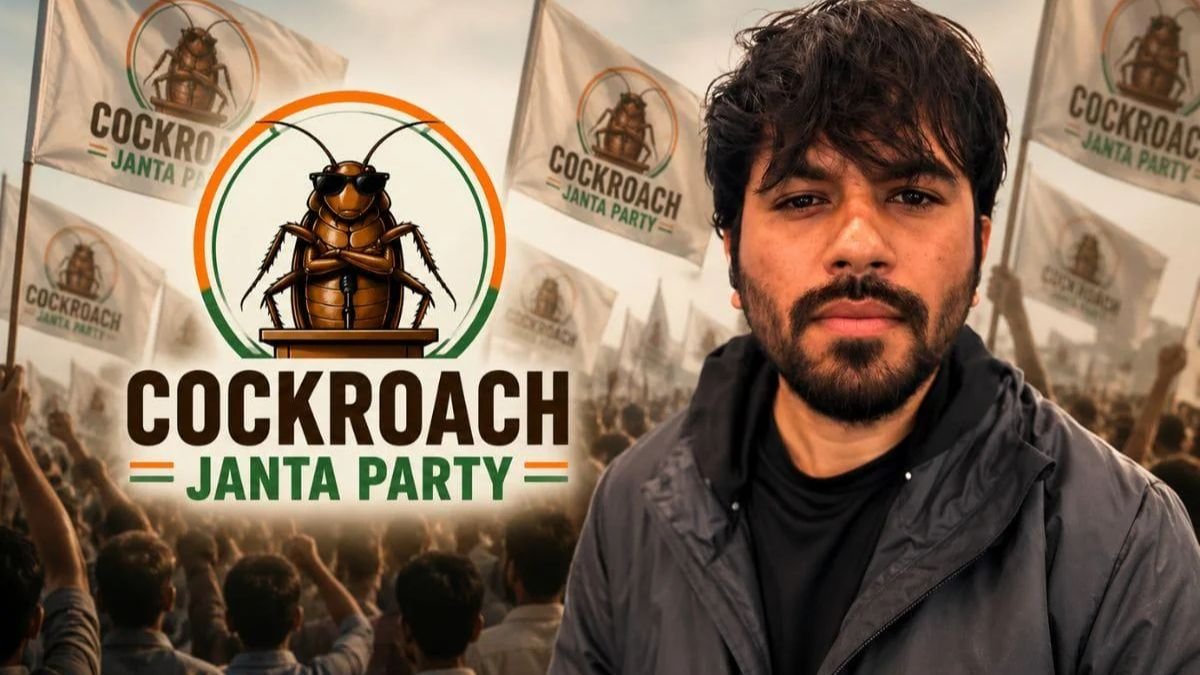
Abhijeet Dipke—a name recently associated with the “Cockroach Janata Party” controversy—has once again made headlines. However, this time the discussion is not limited merely to political statements or social media disputes; rather, his family’s concerns have also captured the public’s attention. Speaking to the media, Abhijeet Dipke’s parents stated that they feel fearful regarding their son’s political activities and apprehend that a situation involving his arrest could arise at any moment. Following the emergence of their statement, the political atmosphere has become even more heated.
The family also conveyed that they had not wanted their son to enter politics, as the growing acrimony and controversies inherent in the political sphere often end up affecting families as well. This emotional reaction from his parents is now rapidly going viral on social media, with people offering a diverse range of opinions on the entire affair.
What exactly is the controversy?
The phrase “Cockroach Janata Party” has recently sparked a major controversy within Indian politics. Several political parties and leaders reacted sharply to this remark. While some deemed it a violation of democratic decorum, others viewed it as a legitimate form of political expression. Amidst this very controversy, Abhijeet Dipke’s name surfaced in discussions, and almost overnight, the matter escalated into a subject of national-level debate.
Social media platforms witnessed millions of posts and reactions regarding this issue. The question of whether the standard of language used in politics is in a state of continuous decline was also raised during television debates. As the controversy continues to intensify, the family’s anxiety has now become a pivotal element of this unfolding narrative.
Why did the parents express fear of arrest?
Abhijeet Dipke’s parents stated that they fear the political climate has become so tense that legal action could be initiated against him at any given moment. They further added that their family simply wishes to lead a normal life and has no desire to become entangled in any political conflict. The parents maintain that the controversy has subjected their family to increased mental stress, and the reactions from people in their immediate vicinity have only served to exacerbate their anxiety. Their statement has raised a new question: do political controversies affect only the leaders involved, or do their families, too, end up paying the price? Many people on social media expressed sympathy for the family, while others characterized the situation as merely a facet of political pressure.
A Debate Erupts on Social Media
As soon as the family’s statement surfaced, a debate ignited across Twitter, Facebook, and YouTube. Some users argued that, in a democracy, every individual has the right to express their views and that no one should be forced to live in an atmosphere of fear. Conversely, others criticized the controversial statements, asserting that those in public life must recognize their responsibility regarding their language and conduct.
Political analysts believe that in today’s digital age, any controversy can escalate into a national issue within a matter of hours. Thanks to social media, political events are no longer confined solely to the leaders involved; they now invariably impact their families and personal lives as well.
The Growing Tension Between Politics and Family
This is not the first instance in Indian politics where the fallout from a controversy has extended to the families of those involved. Time and again, the relatives of leaders and political activists find themselves subjected to public pressure, online trolling, and intense media scrutiny. The statement issued by Abhijeet Dipke’s parents serves to highlight this broader, systemic issue.
Experts observe that as political competition becomes increasingly aggressive, the attendant personal and familial pressures continue to mount. Families often wish to remain detached from political controversies; however, the repercussions of public discourse inevitably reach them as well.
Could This Controversy Escalate Further?
Political observers believe that this controversy is likely to remain a prominent topic of discussion in the days to come. Should any legal or political action be initiated in this matter, it could potentially evolve into a major issue within the national political landscape. On the other hand, some believe that the controversy may gradually subside; however, for the moment, the family’s reaction has imbued the entire episode with a deeply human and emotional dimension.
This entire episode has also demonstrated that politics is no longer merely a battle of ideologies; rather, it now exerts a tangible impact on people’s private lives and their mental well-being. This is precisely why the statement made by Abhijeet Dipke’s parents so rapidly became a topic of widespread discussion among the public.
Conclusion
“We fear arrest”—this statement reflects not merely the anxiety of a single family but also presents a poignant snapshot of the current political climate. The controversy surrounding Abhijeet Dipke has demonstrated just how far-reaching the influence of political rhetoric and social media has become.
The family’s emotional response has compelled people to reflect on the fact that the escalating acrimony in politics impacts not only the leaders themselves but also those closest to them. In the days to come, it will be crucial to observe the direction in which this controversy unfolds and whether political parties draw any lessons from it.
FAQs
Q1. Why are Abhijeet Dipke’s parents fearing arrest?
A. The parents said they are worried that the growing political controversy could lead to legal action or detention.
Q2. What is the ‘Cockroach Janata Party’ controversy?
A. The controversy began after a politically sensitive remark sparked outrage and heated debates online and offline.
Q3. How has the public reacted to the controversy?
A. People on social media have shared mixed reactions, with some supporting free speech and others criticizing the remarks.
