
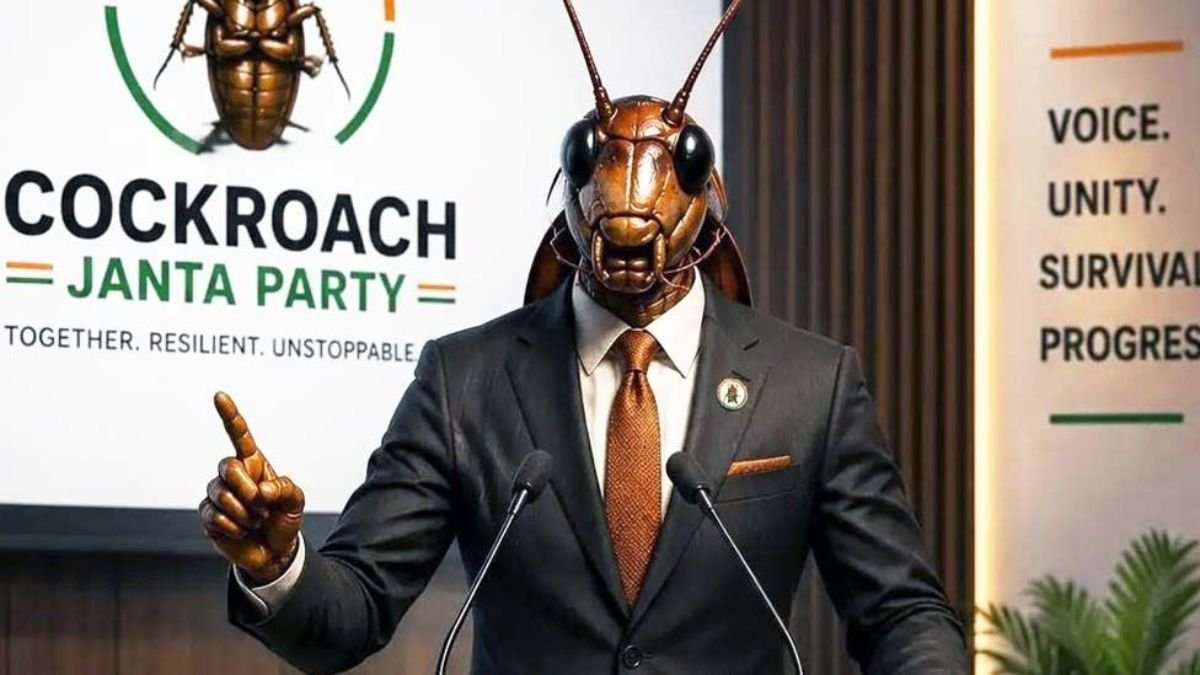
In Indian politics, issues often emerge that suddenly become the subject of nationwide discussion. This time, something similar occurred; however, the surprising twist was that at the center of this debate—rather than a prominent leader, a political party, or an election manifesto—stood a “Cockroach.” A discussion that began on social media swiftly transformed into a national political debate, prompting many to jokingly dub it India’s “new political superstar.” This incident transcended the realm of a mere viral trend; it raised pertinent questions regarding political discourse, social media culture, and the nature of democratic dialogue.
In today’s digital age, a single word or statement can spread across the entire country within a matter of hours. This is precisely why the controversy surrounding the “cockroach” has ceased to be confined merely to internet memes; it has evolved into a subject of serious deliberation among both political analysts and the general public.
How Did the Controversy Begin?
The entire controversy was sparked by a political remark in which the word “cockroach” was used. No sooner had the statement surfaced than social media platforms were inundated with a flood of reactions from the public. While some interpreted it as political satire, many others deemed it derogatory and a violation of democratic decorum.
Gradually, the term went so viral that it began appearing ubiquitously across Twitter trends, meme pages, and YouTube discussions. Many users jokingly began referring to it as “India’s new political superstar.” Yet, beneath this jest lay a serious underlying debate: Is the standard of discourse in Indian politics steadily deteriorating?
Social media has transformed this topic into a national issue.
Today, social media is no longer merely a platform for entertainment. It has evolved into a pivotal component of politics, public opinion, and electoral strategies. The “cockroach” controversy is widely regarded as a prime example of this phenomenon. Within just a few hours, millions of posts, videos, and memes went viral across the internet.
While the youth demographic approached this entire controversy with humor and satire, many veteran political analysts expressed concern, arguing that such language serves to undermine the integrity of democratic debate. Experts believe that the rapid pace of social media is now making politics itself more aggressive and emotionally charged.
The Long-Standing Tradition of Satire and Sarcasm in Politics
Satire and sarcasm are nothing new in Indian politics. For years, leaders have taken jibes at one another, and on many occasions, such statements have even made headlines. However, the difference in the digital age is that every statement now goes viral instantly, and its impact becomes far greater than ever before.
The “Cockroach” controversy demonstrated that words spoken in politics are no longer confined merely to speeches; rather, they become an integral part of internet culture. This is precisely why a single, ordinary word sparked a nationwide political debate.
Mixed Reactions from the Public
Public opinion regarding this entire controversy appeared divided. Some argued that sharp satire is a common occurrence in politics and should not be taken too seriously. On the other hand, many asserted that leaders must exercise extreme caution and thoughtfulness in their choice of words when speaking on public platforms.
Many citizens also raised the question: why do political discussions revolve around such controversies when the country is grappling with serious issues like unemployment, inflation, and economic challenges? People believe that social media trends often divert attention away from the real issues at hand.
Is This the New Face of Politics?
Political analysts believe that contemporary politics has become far more dependent on “viral culture” than ever before. Nowadays, it is short clips, memes, and social media posts—rather than full-length speeches—that dominate political discourse. This is the reason why even a word like “cockroach” managed to evolve into a national-level political symbol.
Some experts view this as part of an evolving political style within a democracy, while others warn that it poses a threat to substantive politics. They argue that if politics becomes confined solely to viral statements, critical subjects such as policy and development may be left by the wayside.
The Importance of Language in a Democracy
In a democracy, disagreement and criticism are natural; however, maintaining the decorum and propriety of language is considered equally essential. Political statements are not confined solely to leaders; rather, they also influence the social climate. Consequently, the choice of words in public life becomes a matter of immense significance.
While discussions—such as the notion that “a cockroach has become India’s new political superstar”—may have become a subject of jest on social media, they have undoubtedly raised serious questions regarding the quality of political discourse.
Conclusion
The “cockroach” controversy has vividly demonstrated how a single, seemingly insignificant word can escalate into a national debate. In the era of social media, politics is no longer confined merely to the halls of Parliament and public rallies; its profound impact is now equally palpable within the digital realm of the internet. This entire episode has underscored the rapid pace at which the contemporary political landscape is shifting—a landscape where even a single viral word can attain the status of a “political superstar.”
However, amidst this controversy, the most critical question remains: Will the focus of politics remain centered on substantive issues, or will viral trends continue to dominate the discourse. The future trajectory of Indian politics will, to a significant extent, hinge upon the answer to this very question.
FAQs
Q1. Why is a cockroach being called a political superstar in India?
A. The term became viral after a political controversy sparked massive discussions and memes online.
Q2. How did social media react to the controversy?
A. Social media users turned the issue into a trending topic with jokes, debates, and political satire.
Q3. What does this controversy say about Indian politics?
A. The incident highlights how viral moments and online trends now strongly influence political discussions.
