
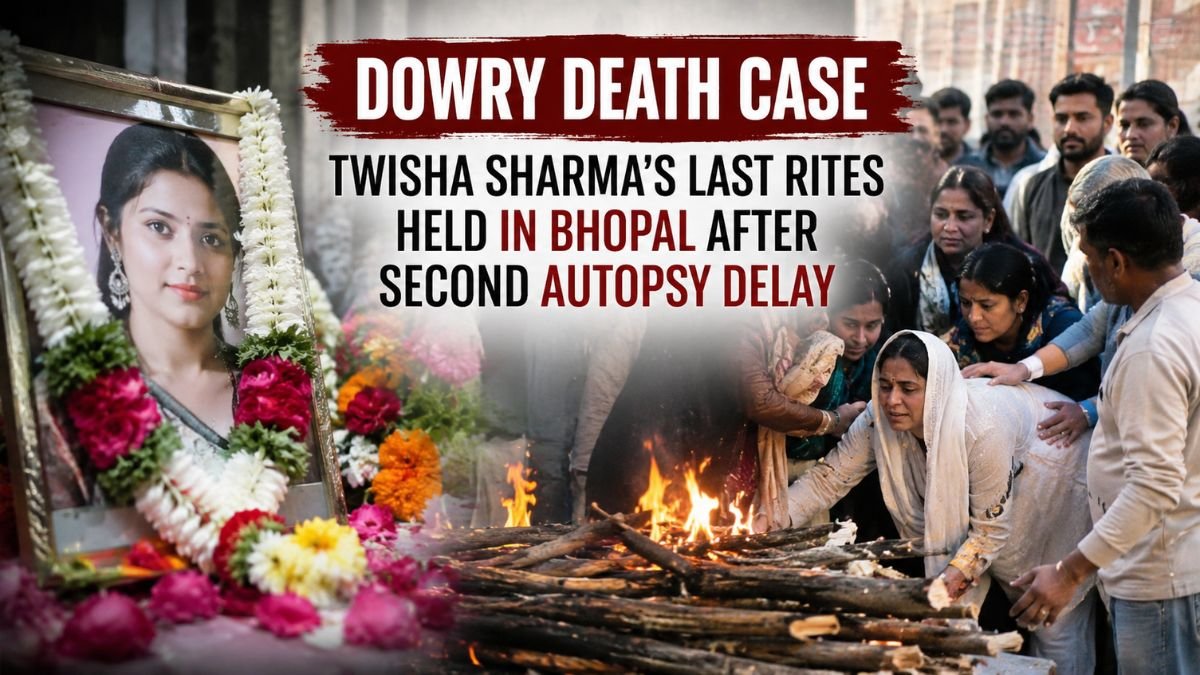
The death of Twisha Sharma has become one of the most discussed and emotionally charged cases in recent days, drawing attention not only because of the allegations surrounding her death but also due to the delay in the second autopsy that postponed her final rites. The young woman’s cremation was eventually conducted in Bhopal amid grief, anger, and growing demands for justice from family members and supporters. The case has once again highlighted the painful issue of dowry-related violence in India, a social problem that continues to affect countless families despite strict legal provisions designed to prevent such crimes.
Twisha Sharma’s death has deeply disturbed many people, especially after allegations surfaced that she may have been subjected to harassment connected to dowry demands. Her family has reportedly expressed suspicion over the circumstances surrounding her death and demanded a thorough investigation to uncover the truth. As public attention intensified, authorities ordered a second autopsy to address concerns raised by the family and ensure transparency in the investigation process. However, the delay in conducting the second post-mortem added emotional stress to an already grieving family, prolonging uncertainty and raising further questions in the minds of many observers.
Delay in Second Autopsy Creates Tension
One of the major developments in the case was the delay in the second autopsy examination. According to reports, procedural issues and administrative formalities slowed down the process, preventing the family from performing the last rites immediately. For grieving relatives, the wait became emotionally exhausting, as they were forced to delay the funeral while awaiting medical examination results that could potentially play a key role in determining the cause and circumstances of Twisha’s death.
The delay also triggered criticism from sections of the public and social activists who argued that sensitive cases involving allegations of dowry harassment and suspicious deaths should be handled with greater urgency. Many questioned why procedural obstacles should stand in the way of timely justice and compassionate treatment of bereaved families. Social media platforms were filled with messages demanding accountability, faster investigations, and stronger action against those responsible if any wrongdoing is confirmed.
Medical examinations in suspicious death cases are considered extremely important because they often provide crucial forensic evidence. In dowry death investigations, post-mortem reports can help authorities determine whether there were signs of physical violence, poisoning, self-harm, or other suspicious factors. This is why Twisha Sharma’s family reportedly insisted on a second autopsy, believing that a more detailed examination was necessary to eliminate doubts and ensure a fair investigation.
Final Rites Performed Amid Grief and Public Attention
After the delay caused by the second autopsy process, Twisha Sharma’s final rites were eventually held in Bhopal in the presence of grieving relatives, friends, and well-wishers. The atmosphere during the funeral was reportedly filled with sorrow and emotional distress, as family members struggled to come to terms with the tragic loss. Many supporters gathered to express solidarity with the family and to demand justice for the young woman.
The emotional scenes from the funeral reflected not only personal grief but also the larger frustration felt by many citizens regarding cases of alleged dowry harassment. Women’s rights activists and social organizations have repeatedly argued that despite awareness campaigns and legal safeguards, many victims continue to suffer silently due to societal pressure, fear, and family expectations. Cases like Twisha Sharma’s often become symbols of a broader social issue that extends beyond a single family tragedy.
Several people attending the funeral reportedly expressed hope that authorities would conduct an impartial investigation and ensure that the truth comes out without delay. The family’s demand for justice has become a central focus of public discussion, with many insisting that the investigation should proceed transparently and without external influence.
Dowry-Related Violence Remains a Serious Social Issue
The case has once again drawn national attention to the continuing problem of dowry-related violence in India. Despite strict laws prohibiting dowry demands and protecting women from harassment, reports of abuse, cruelty, and suspicious deaths linked to dowry disputes continue to emerge from different parts of the country. Legal experts and social activists argue that while laws exist, implementation and social awareness still remain major challenges.
Dowry-related cases are often emotionally and legally complex because they involve family relationships, financial pressure, and social expectations. Many women reportedly face harassment after marriage over demands for money, property, or expensive gifts. In some tragic cases, such disputes allegedly escalate into violence, mental torture, or suspicious deaths. Activists believe that societal attitudes toward marriage and financial expectations must change if the problem is to be addressed effectively.
Twisha Sharma’s case has become part of a larger conversation about women’s safety, domestic violence, and the importance of ensuring dignity and equality within marriage. Women’s rights groups have renewed calls for stronger support systems for victims, faster judicial procedures, and more effective intervention mechanisms to prevent harassment before it turns fatal.
Investigation Continues Amid Public Pressure
Authorities are expected to continue investigating the case following the completion of the second autopsy and the performance of the last rites. Investigators will likely examine medical findings, statements from family members, digital evidence, communication records, and other relevant details to determine the circumstances surrounding Twisha Sharma’s death. Public pressure surrounding the case is also likely to keep the investigation under close scrutiny.
Legal experts note that dowry death cases require careful handling because of the serious nature of the allegations involved. Under Indian law, suspicious deaths of married women within a certain period after marriage often lead to intensified legal examination, particularly when allegations of cruelty or harassment emerge. Courts generally consider such matters with significant seriousness because they involve both criminal law and broader social concerns.
At the same time, experts stress the importance of allowing investigators to complete their work based on evidence rather than speculation. While emotions surrounding the case remain intense, legal procedures will ultimately determine whether criminal responsibility can be established against any individual connected to the matter.
Growing Demand for Faster Justice
The delay in the second autopsy and the emotional suffering experienced by the family have intensified public demands for quicker justice in sensitive cases involving women’s deaths. Many citizens believe that delays in forensic procedures, investigations, and court hearings can deepen trauma for victims’ families and weaken public trust in the system. As a result, there have been renewed calls for dedicated fast-track mechanisms in cases related to dowry harassment and domestic violence.
Experts believe that alongside legal reform, greater social awareness is equally important. Educational campaigns, community intervention programs, and stronger support networks for women facing abuse could help reduce the number of such tragedies in the future. Many activists argue that preventing dowry-related violence requires both strict legal enforcement and a broader cultural shift away from outdated social practices.
Conclusion
The death of Twisha Sharma and the delay surrounding her second autopsy have transformed a personal tragedy into a matter of wider public concern. Her final rites in Bhopal marked an emotional moment for grieving loved ones, but the demand for answers and accountability continues to grow. As investigators proceed with the case, many people across the country are watching closely, hoping that justice will be delivered fairly and transparently.
Beyond the immediate investigation, the case serves as another painful reminder that dowry-related violence remains a serious issue in Indian society. The tragedy has reopened discussions about women’s safety, legal accountability, and the urgent need for social reform. Whether through stronger laws, faster investigations, or changing social attitudes, many believe that meaningful action is necessary to prevent similar tragedies from occurring in the future.
FAQs
Q1. Why was Twisha Sharma’s last rites delayed?
A. The funeral was delayed due to a second autopsy ordered in the dowry death investigation.
Q2. Where were Twisha Sharma’s last rites held?
A. Her final rites were performed in Bhopal after the post-mortem procedures were completed.
Q3. What is being investigated in the case?
A. Authorities are investigating allegations related to dowry harassment and the circumstances surrounding her death.
