
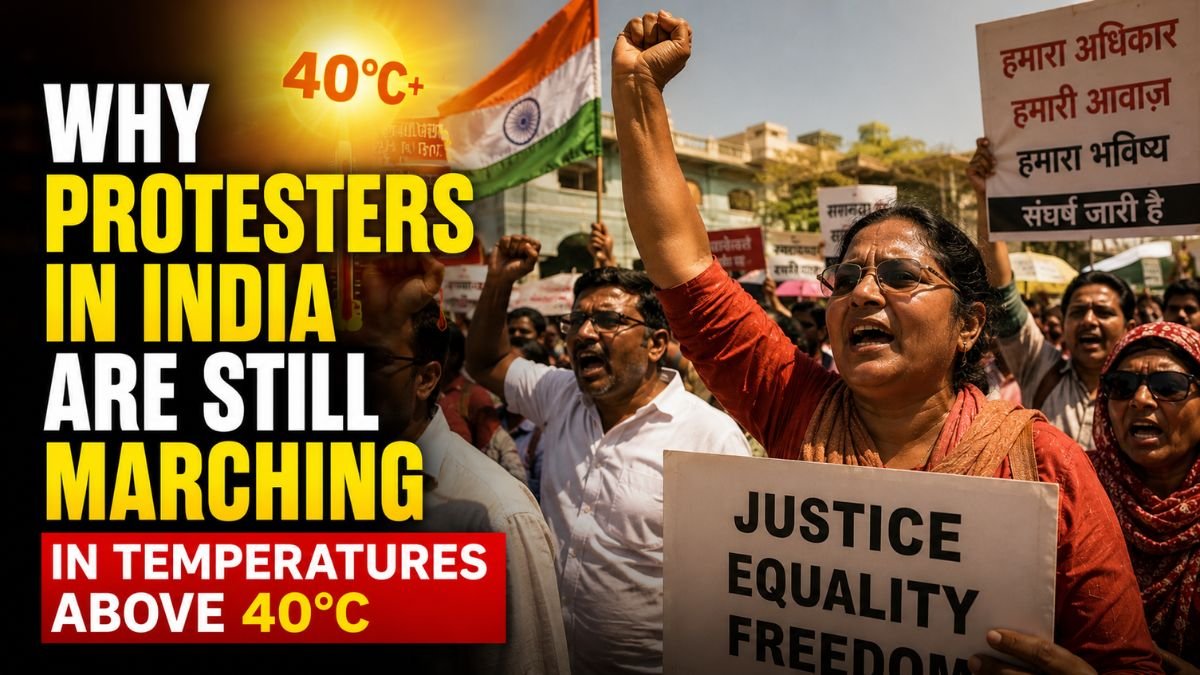
Heat is currently at its peak in many parts of India. Temperatures in several states have crossed the 40°C mark, and venturing outdoors during the afternoon is considered a health risk. Despite these harsh conditions, protesters remain steadfast on the streets in many locations.
why do people continue their agitation even in such scorching heat?
The answer lies not merely in the weather but in the issues for which the protesters are raising their voices. For them, this movement is not just a protest but a struggle concerning their rights, demands, and future. That is why the blazing sun, heatwaves, and adverse weather fail to weaken their resolve.
What are the protesters’ main demands?
Every movement has a unique background, and the current protests are no exception. Various groups seek to draw the attention of the government and relevant authorities to their specific demands. While issues related to education and employment are prominent in some areas, dissatisfaction regarding administrative decisions, public policies, or social concerns is evident in others.
Protesters state that had appropriate action been taken on their demands in a timely manner, they might not have needed to take to the streets under such trying conditions. Their objective is not merely to register a protest but to establish a dialogue and find solutions to their problems.
How is the scorching heat affecting the movement?
Staying under the open sky for extended periods in temperatures exceeding 40°C is challenging for anyone. Such weather significantly increases the risk of heatstroke, dehydration, fatigue, and other health issues. Protesters often have to sit or stand in the sun for hours, which directly impacts their physical well-being.
In many places, voluntary organizations and local residents are trying to provide drinking water, shade, first aid, and other essential facilities for the protesters. Despite this, the harsh weather remains a major challenge for those participating in the movement. At times, some individuals are compelled to temporarily leave the protest site due to health reasons, yet the movement itself does not come to a complete halt.
Why do people refuse to back down, even in such trying circumstances?
In any democratic society, protests are considered a vital aspect of citizens’ rights. When people feel their voices are not being adequately heard or their grievances remain unaddressed, they often resort to peaceful protest.
Many participants in such movements believe that withdrawing at this juncture could weaken their demands. Consequently, they deem it essential to sustain the movement despite harsh weather conditions. For them, this is not merely a battle for the present but a crucial endeavor for the future.
The Role of Dialogue Between the Administration and Protesters
Dialogue between the administration and protesters plays a pivotal role in any prolonged movement. If both parties strive to find a solution through negotiation, tensions can be alleviated, paving the way for a peaceful resolution.
In many instances, officials have engaged with representatives and assured them that their demands would be heard. However, protesters seek concrete, time-bound action rather than mere assurances. Effective dialogue often increases the likelihood of a resolution, thereby reducing the need for protracted protests.
How Social Media Has Given a New Dimension to the Movement
In today’s digital era, social media has emerged as a crucial medium for any movement. Images, videos, and updates related to the protest reach millions of people within minutes, garnering national and international recognition for the cause.
While many use social media to express their opinions—either in support of or in opposition to the protesters—it is important to note that not all information shared online is accurate. Therefore, verifying news through reliable sources before believing it is essential.
Safety and Health Concerns Amidst the Heat
For those protesting for extended periods in scorching heat, health becomes the foremost priority. Experts advise that drinking plenty of water, taking periodic breaks, keeping one’s head covered, and adopting measures to protect against heatstroke are crucial.
Medical assistance is also arranged at many event venues to ensure immediate treatment in case of an emergency. The administration often collaborates with the health department to provide necessary facilities and prevent any untoward incidents.
What might happen next?
In the coming days, the trajectory of this movement will largely depend on the talks held between the government and the protesters. If there is positive progress regarding the demands, the movement could gradually come to an end. Conversely, if no concrete solution emerges, the protests may continue.
The protesters’ resolve, maintained despite harsh weather conditions, indicates that they are serious about their demands and intend to continue raising their voices peacefully until a resolution is found. However, in a democratic system, dialogue and compromise between the two parties are considered the most effective path forward.
Conclusion
The fact that protests continue on the streets even in temperatures exceeding 40°C demonstrates that, for many, these issues are not merely matters of immediate discontent but hold long-term significance. The protesters’ steadfastness—despite extreme heat, physical hardships, and health risks—reflects their firm determination.
At the same time, it is essential for the administration to seek a resolution through dialogue, transparency, and sensitivity. In a democracy, both peaceful protest and constructive dialogue are equally important. It will be interesting to see how the resolution of this movement unfolds through dialogue and mutual understanding in the future.
FAQs
Q1. Why are protesters in India continuing to march despite temperatures above 40°C?
A. Protesters say their demands are important enough to continue demonstrating despite the extreme heat.
Q2. What challenges do protesters face during the heatwave?
A. They face risks such as dehydration, heat exhaustion, and prolonged exposure to high temperatures.
Q3. What could bring the protests to an end?
A. Meaningful dialogue and progress on the protesters’ key demands could help resolve the demonstrations.
