
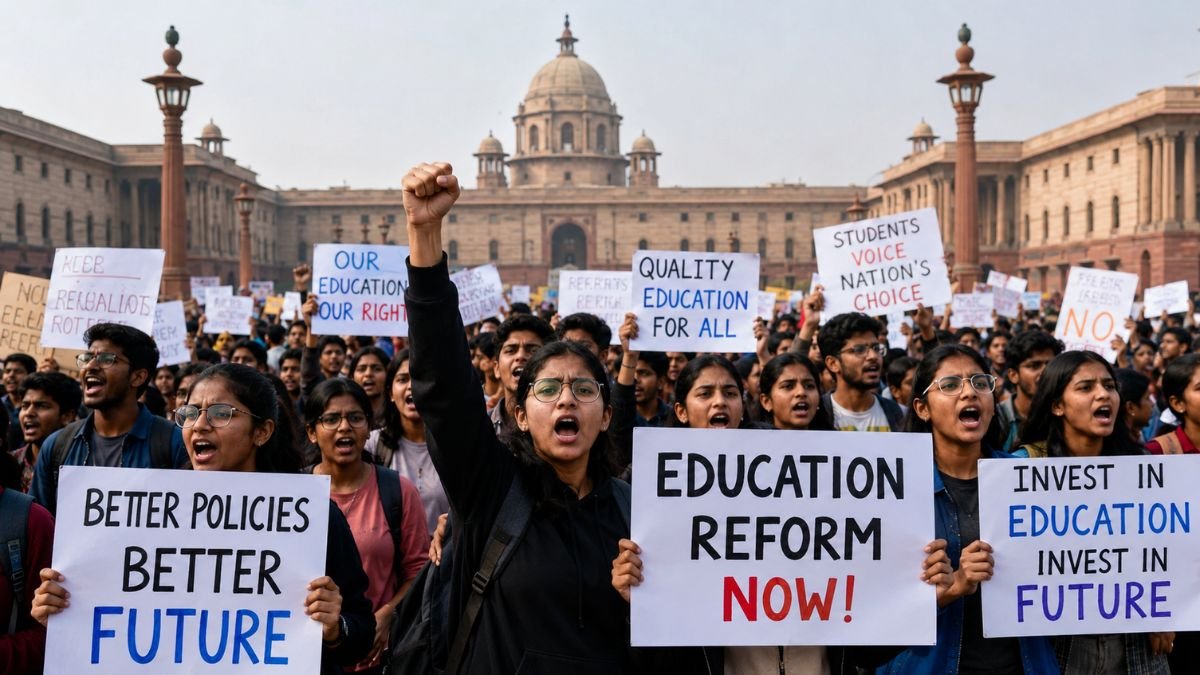
The capital once again echoed with the voices of the youth. TA large number of students, youth organizations, and members of the education sector were seen participating in the protests against an inefficient educational system. During that time of protest, posters, banners, and flags were held by students, urging for quality education and modern curriculum.
Quickly turned out to be a national issue. The protestors have a belief that education is not only an instrument to earn a degree but the key that helps build the country’s future. SIf the education system does not keep up with the pace of changes in the world, then the future generation could lag behind other nations in international competitions.
A Campaign Originating from Social Media Transforms into a Nationwide Campaign
A key feature of this movement was its origin on social media platforms. Videos and posts shared by a few students quickly reached millions of people. Subsequently, students from various states across the country joined the campaign.It is clear that digital forums have enabled the youth to come together as a group and engage in discussions regarding issues related to education.
Through hashtag campaigns, students raised awareness regarding various issues like education for employment, changes to examination systems, enhancement of government institution standards, and effectiveness of technical education. It can be said that the movement did not confine itself to the capital city but rather extended throughout the country.
Why Has the Demand for Changes in the Education System Intensified?
There have been many questions posed in relation to the education system over the past few years. The students claim that there is no practical knowledge in the existing education system and the curriculums being taught are not in sync with the present requirements of the industries and the job market. In addition to this, problems like the delay in holding the competitive examinations, delayed results, cases of paper leakages, and scarcity of resources in the government institutions of learning have added more stress on the part of the students.
The protesters demand that the education policy be made practical in such a way that it benefits all students equally. This can only happen if the difference between the rural and the urban areas is bridged..
What are the key demands of the youth?
Students participating in the movement presented several significant demands to the government. Foremost among these is ensuring access to quality and affordable education. Moreover, there was a need for modern education driven by technological advancements, development of digital resources, teacher training programs, improvement of infrastructure in government schools and colleges, and increased transparency in the examination process.
According to the youth, the objective of education should not just be the passing of examinations, but rather development of skillset, innovativeness, and abilities of the students. Hence, there is a need for inclusion of practical training, entrepreneurship, and research in the syllabusThere was a need for the inclusion of the youth in the decision-making processes concerning education.
Peaceful protest attracts the nation’s attention
This particular protest in the capital city was carried out in a completely peaceful manner. The students expressed their views in an orderly fashion without any acts of violence or chaos. Teachers, educationists, and various other social groups were also in agreement with this particular movement of the youth.
In their opinion, in a democratic nation, all citizens have a right to raise their demand in a peaceful manner. The youth during the demonstration focused on the requirement of educational reforms through speeches, discussions, and cultural programs.
Response from the government and experts
The movement has sparked fresh discussions regarding educational reform. Education experts believe that many of the issues raised by the students have long been topics of debate and require serious attention.As per the experts, just formulating the policy itself is not enough; equal importance needs to be given to its successful execution as well.
On the other hand, the government too has realized the requirement of bringing about some reforms in the educational sector and has been willing to understand the point of view of the students. Various officials have shown readiness to take into consideration the recommendations of the students and even the expert opinions in planning the future course of action.
The Role of Youth in the Nation’s Future
The future of any nation depends on its young generation. If this generation is educated, trained and provided with equal opportunities then it would make great contributions in building up of their economy and society.
This is the reason why education reform is not a student’s concern but is a problem associated with the growth of the society and nation.The current movement has made it clear that today’s youth do not wish to limit themselves to personal success alone; rather, they seek an education system that is equitable for all.
Q1. Why are Indian youth protesting for education reform?
A. Indian youth are demanding education reforms to improve the quality of education, modernize the curriculum, ensure transparent examinations, create better employment opportunities, and make education more accessible and affordable for all students.
Q2. What are the main demands of the youth movement?
A. The movement calls for better education policies, fair and transparent examination systems, improved government educational institutions, digital learning resources, skill-based education, and stronger links between education and employment opportunities.
Q3. How has social media influenced the education reform movement in India?
A. Social media has played a crucial role by helping students organize campaigns, share their concerns, spread awareness, and unite supporters across the country, turning the movement into a nationwide discussion on education reform.
