
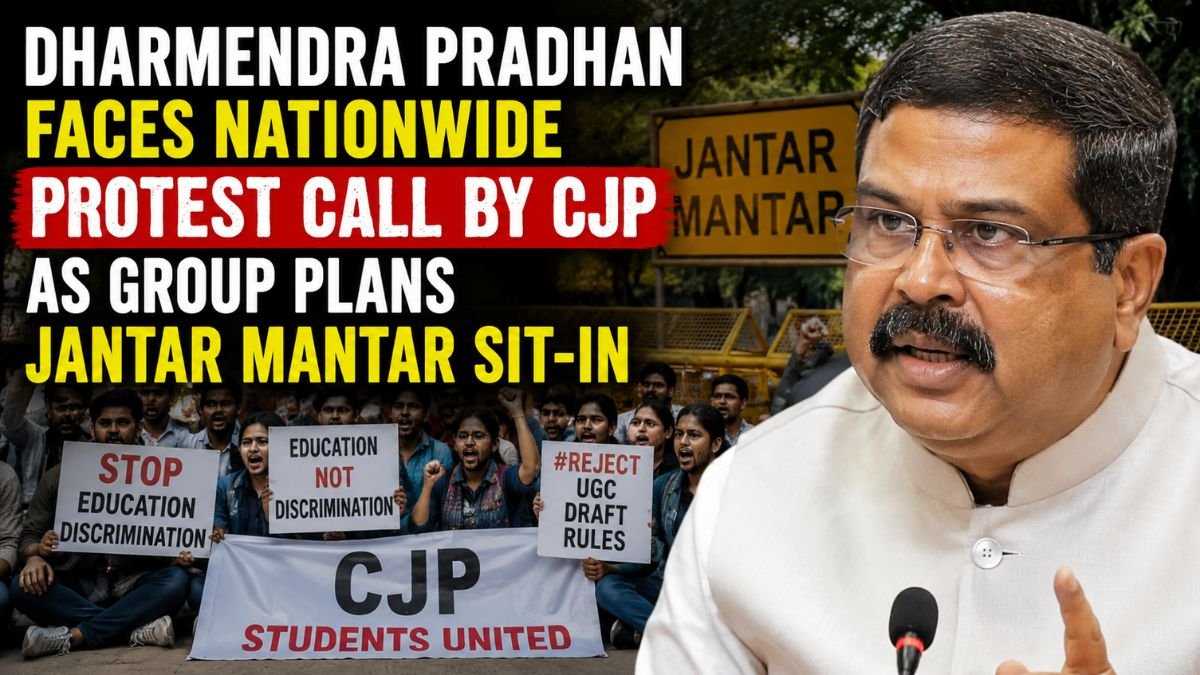
Voices of dissent appear to be growing louder in the country’s political landscape once again. CJP (Citizens for Justice and Peace) has announced plans to launch a nationwide protest against Union Education Minister Dharmendra Pradhan. The organization has stated that it will hold demonstrations across the country to press for its demands and may even initiate an indefinite sit-in protest at Jantar Mantar in New Delhi if necessary. This announcement has sparked intense discussion within political and social circles.
CJP maintains that the movement will not be confined to a single location; instead, efforts will be made to mobilize people from various parts of the country. The organization asserts that its concerns stem from serious issues and that it intends to register its protest democratically to ensure its message reaches the government. Through this movement, the organization aims to present its demands and questions on a public platform.
Protest to Begin in Pune
According to reports, CJP plans to kick off its protest campaign in Pune. Activists associated with the organization will stage a demonstration there, with subsequent plans to expand the movement to a national level. The protest in Pune could potentially evolve into a larger movement in the coming days.
Those associated with CJP state that they wish to raise their voices peacefully, aiming to convey their concerns to the government and relevant authorities. The organization has also indicated that the movement could be intensified if their demands are not addressed.
Warning of Indefinite Sit-in at Jantar Mantar
CJP’s most significant announcement concerns a potential indefinite sit-in protest at Jantar Mantar. Jantar Mantar has long been a key venue for social and political movements in India, where various organizations have staged protests to voice their demands.
CJP has stated that if it does not receive an appropriate response to its demands, it may decide to stage a prolonged sit-in in Delhi. However, such movements also require consideration of factors such as administrative permission, security arrangements, and law and order.
What Are the Reasons Behind the Protest?
The organization has expressed its concerns regarding the issues raised by the CJP. They state that questions have arisen concerning certain policy decisions and systemic arrangements, necessitating public discussion. The organization seeks a government response and concrete steps toward a resolution.
Such movements often bring forth diverse viewpoints. While protesting organizations frame their demands as the voice of the people, the government and its supporters view the policies from a different perspective. In a democracy, such debates and protests are considered an integral part of civic engagement.
Awaiting the Government’s Response
Following the CJP’s announcement, all eyes are now on the government’s response. It remains unclear what official steps will be taken in this matter. In the coming days, it will be crucial to observe whether any possibility for dialogue emerges between the government and the protesting organization.
There have been numerous instances in the country where attempts were made to resolve issues through dialogue during major social and political movements. Consequently, the future trajectory of this protest will depend on how events unfold.
The Role of Protest in a Democratic System
In a democratic nation like India, protests provide a platform for people to voice their opinions. When disagreements arise over specific issues, organizations and citizens articulate their demands through peaceful means. However, the success of any movement hinges on how organized, peaceful, and dialogue-oriented it remains.
The CJP’s movement is also being viewed as part of this democratic process. The organization aims to convey its message to the public and the government, while the future course of events will depend on the reactions of the concerned parties.
What Might Happen Next?
For now, the CJP’s announcement has stirred the political atmosphere. If the protest, originating in Pune, garners widespread support, it could evolve into a national-level issue. Meanwhile, the administration will play a pivotal role in ensuring the protest remains peaceful.
New updates regarding this movement may emerge in the coming days. The public and political analysts will now be watching to see what strategy the CJP adopts and how the government responds to this protest.
This entire sequence of events once again demonstrates the vital importance of dialogue among the public, organizations, and the government in a democracy. Resolving any dispute or disagreement through dialogue and constitutional means is considered the most effective approach.
FAQs
Q1. Why is CJP planning a protest against Dharmendra Pradhan?
A. CJP is planning the protest to raise concerns over issues it says require public attention and government response.
Q2. Where will the CJP protest take place?
A. The protest is expected to begin in Pune, with plans for a possible sit-in at Jantar Mantar in New Delhi.
Q3. What is the main demand of the CJP movement?
A. The group aims to highlight its concerns and seek action or clarification from the authorities.
