
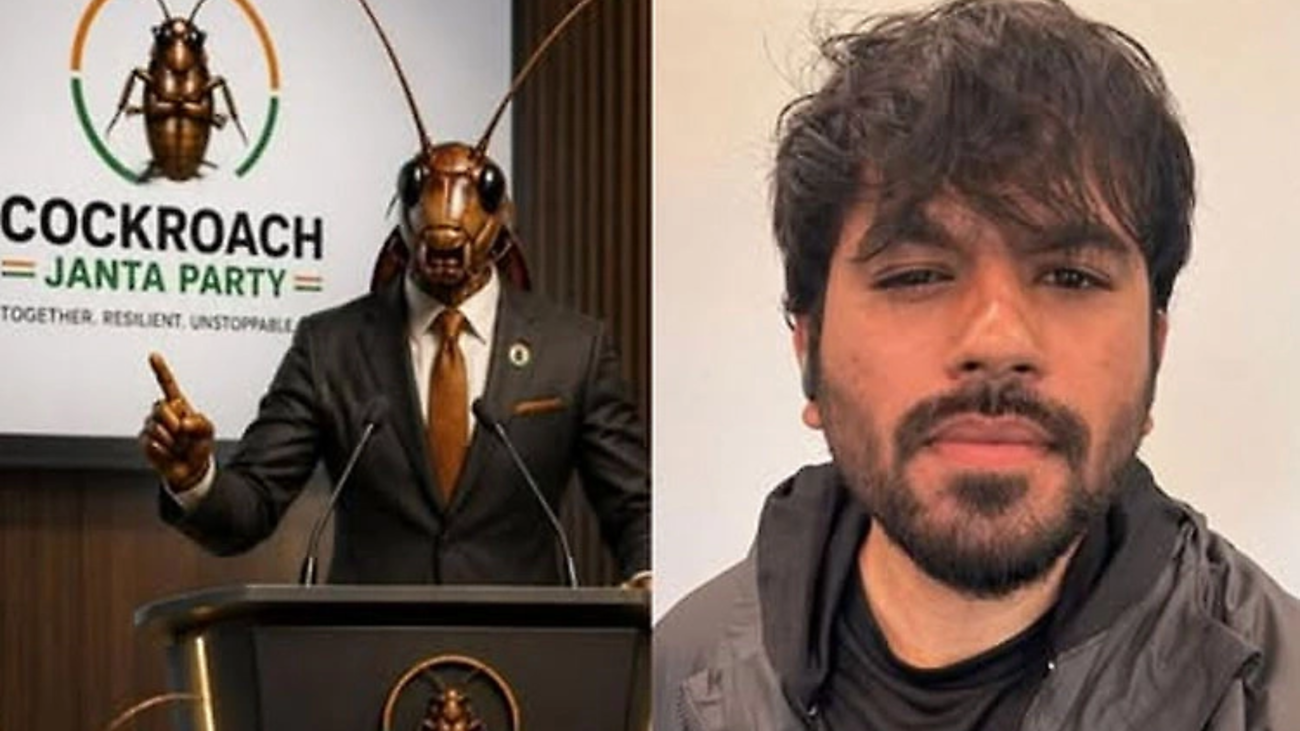
Abhijeet Dipke Announces Return to India Amid Growing Political Debate
The founder of the Cockroach Janta Party, Abhijeet Dipke, has stated that he will return to India on June 6, a move that has created extensive discussion throughout social media platforms and political circles. Dipke, who has recently attracted a lot of attention online due to the Cockroach Janta Party’s explosive growth online, said that his return signifies the start of a new phase in his campaign that is centered on accountability in public administration, education reforms, and transparency.
Following his arrival in India, Dipke plans to start a national awareness campaign, according to statements made by party leaders and supporters. The resignation of Union Education Minister Dharmendra Pradhan is said to be one of the campaign’s main demands. Supporters, detractors, and political watchers who are keeping a close eye on the changing circumstances around the unorthodox political movement have all reacted strongly to the revelation.
In India’s internet political scene, the Cockroach Janta Party has become a singular phenomenon. The organization’s ability to quickly gain millions of online followers has drawn public attention and sparked debate about the future of social media-driven political activism, despite the fact that it lacks the infrastructure and electoral clout of traditional political parties.
The Cockroach Janta Party’s Ascent
Viral content that blended satire, political criticism, and public participation initially helped the Cockroach Janta Party become well-known. What started out as an online movement swiftly became a well-known brand among younger internet users. The party’s messaging frequently centers on topics like public involvement in policymaking, employment opportunity, government accountability, and educational standards.
Abhijeet Dipke became the face of the campaign with frequent online appearances and direct interaction with fans. His method is very different from conventional political communication techniques. Rather than depending exclusively on rallies or TV appearances, Dipke has developed a significant amount of his influence through digital platforms where followers actively share content, take part in conversations, and support the party’s initiatives.
Political observers have remarked that the rise of internet-based movements indicates changing patterns of civic engagement in India. Social media platforms are rapidly being used by younger voters to obtain political information, which gives non-traditional voices a chance to become visible outside of established political structures.
Why Is Dharmendra Pradhan the Target?
The call for Dharmendra Pradhan’s resignation is one of the most talked-about elements of Dipke’s forthcoming campaign. The Cockroach Janta Party’s supporters contend that substantial changes and more robust accountability systems are needed in India’s educational system. They contend that issues with policy execution, student welfare, educational infrastructure, and exam administration have led to widespread discontent across many societal segments.
Concerns expressed by parents and students about the accessibility and quality of education are anticipated to be a major emphasis of the campaign. In order to draw attention to what they characterize as systemic problems impacting educational institutions, party leaders have stated that they want to host talks, awareness campaigns, and public outreach programs.
However, detractors contend that requests for resignation ought to be backed by convincing data and comprehensive policy options. They argue that a variety of parties, including state governments, universities, regulatory agencies, and educational institutions, are involved in the complicated matter of education reform. They therefore think that full policy talks, as opposed to merely symbolic political demands, are necessary for significant change.
Public Mobilization and Social Media Influence
The extraordinary growth of the Cockroach Janta Party on social media has become a subject of considerable interest. The movement was able to draw a sizable online following in a comparatively short amount of time, proving the ability of digital platforms to influence political discourse.
The party’s success, according to experts, demonstrates the increasing significance of internet participation in contemporary politics. Emerging movements can interact directly with followers by avoiding the gatekeepers of traditional media through digital platforms. Particularly among younger groups who spend a lot of time consuming information online, this opens up possibilities for quick growth.
Analysts warn, meanwhile, that popularity on the internet does not always translate into political clout in the real world. It need organizational structures, grassroots involvement, policy creation, and long-term strategic planning to maintain momentum outside of social media. It’s unclear if the Cockroach Janta Party will be able to effectively grow from an online movement to a more significant political power.
Expectations Surrounding the June 6 Return
The media is anticipated to pay close attention to Abhijeet Dipke’s June 6 return to India. Supporters see the event as a significant turning point that could increase the movement’s visibility and present a chance to reach audiences outside of digital platforms.
Several reports imply that Dipke may participate in public meetings and media interactions quickly after his arrival. The party’s future strategy, suggestions for educational reform, and plans for citizen engagement are probably going to be the main topics of discussion during these appearances.
The reaction to these occurrences, according to observers, may have a big impact on how the movement develops. While low public participation could create concerns about the discrepancy between online fervor and actual support, high public participation could boost the party’s reputation.
The More Comprehensive Discussion of Education Reform
The campaign’s scandal has also rekindled more general conversations about India’s educational system. Millions of students, teachers, and families nationwide are impacted by educational policy, which continues to be one of the most significant public issues.
Exam systems, curriculum modernization, digital learning, skill development, and access to high-quality education have all been the subject of lengthy discussions in recent years. As new demands are placed on educational institutions by evolving economic conditions and technological advancements, these conversations have become more intense.
Reformers contend that in order to equip students for the challenges of the future, India must keep investing in innovative education. They stress how crucial it is to raise institutional responsibility, decrease inequality, and improve learning outcomes. Administrative inefficiencies and implementation difficulties are frequently cited by critics of current systems as areas in need of immediate adjustment.
The Cockroach Janta Party’s campaign is geared to position itself within this broader conversation, using education as a focal point for political participation and public mobilization.
Public Reaction and Political Reactions
Dipke’s announcement has elicited a range of responses. His openness to question established institutions and bring up issues they feel should receive more public notice has been commended by his supporters. The campaign is seen by many as an illustration of grassroots action made possible by digital communication tools.
However, detractors doubt the movement’s ability to produce meaningful policy recommendations that can handle challenging issues in education. Political campaigns focused on individual resignations, according to some critics, may oversimplify problems that call for long-term structural remedies.
Mainstream political parties have usually stayed cautious in their replies, seeking to watch developments before making substantial public pronouncements. However, the movement’s increasing prominence indicates that media outlets and political watchers will continue to pay attention to its operations.
In conclusion
For the Cockroach Janta Party and its quickly growing network of supporters, Abhijeet Dipke’s scheduled return to India on June 6 is a momentous occasion. The movement is putting itself at the center of ongoing discussions about accountability, educational reform, and citizen participation in governance by starting a campaign to get Dharmendra Pradhan to quit.
Critics stress the need for thorough policy discussions and evidence-based solutions, while advocates see the project as a chance to raise public concerns and promote institutional reform. The campaign emphasizes the growing impact of social media-driven political movements in influencing public discourse, regardless of divergent viewpoints.
The Cockroach Janta Party’s ability to translate internet popularity into significant public participation will continue to be the main emphasis as June 6 draws near. Whether the movement develops into a long-lasting force in India’s political landscape or stays mostly a digital phenomena could be decided in the upcoming weeks. Abhijeet Dipke’s comeback has undoubtedly sparked national conversation, guaranteeing that the campaign will be closely monitored by both supporters and detractors.
