
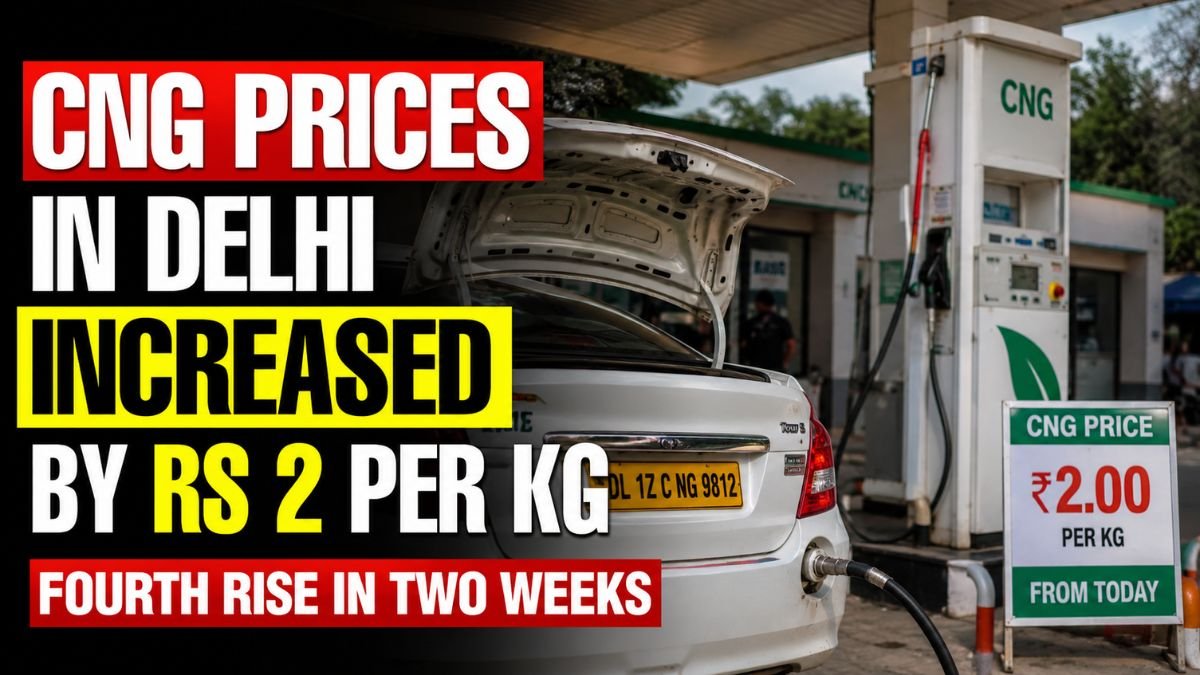
Once again, a hike in CNG prices in Delhi has heightened the concerns of the general public. In the capital, CNG rates have been raised by ₹2 per kilogram; notably, this marks the fourth price hike within just the last two weeks. These continuously rising prices are having a direct impact on the millions of people who use CNG in their vehicles on a daily basis. Auto-rickshaw drivers, taxi drivers, and private vehicle owners now appear distressed due to the escalating costs. While CNG was previously considered a cheaper and more economical alternative compared to petrol and diesel, the incessant price hikes are now taking a toll on people’s savings.
Fourth Hike in Two Weeks Sparks Growing Concern
The rapid pace at which CNG prices have surged over the past few days has taken consumers by surprise. Price revisions are now being observed at intervals of just a few days. This trend has begun to disrupt people’s monthly budgets—particularly those of families that cover long distances on a daily basis. Thousands of commercial vehicles in Delhi and its surrounding areas run on CNG, and their operational costs are now steadily climbing. Experts believe that if this situation persists, an increase in public transport fares could also be witnessed in the near future.
Auto and Taxi Drivers Hit Hardest
The continuous rise in CNG prices has had its most significant impact on auto-rickshaw and taxi drivers. A substantial portion of these drivers’ daily earnings is now being consumed by fuel costs. Many drivers report that while they previously managed to retain a healthy profit margin from their daily earnings, rising CNG prices have now significantly eroded their savings. Some drivers are even demanding a hike in fares, as operating at current rates is becoming increasingly difficult. If prices continue to rise in the coming days, the financial burden on passengers will also become clearly evident.
Growing Woes for Private Vehicle Owners
A large number of people in Delhi use CNG in their private vehicles. Many had purchased CNG-powered cars specifically to avoid the rising costs of petrol; however, CNG prices are now climbing steadily as well. This has resulted in increased monthly expenses for middle-class families. Office-going employees, small business owners, and daily commuters are now increasingly concerned about their fuel expenses. Many point out that the very advantage for which they chose CNG vehicles—cost-effectiveness—is now gradually diminishing.
What Are the Reasons Behind the Price Hikes?
According to experts, fluctuations in international gas prices and supply-related challenges are likely the primary reasons behind the rise in CNG rates. Additionally, transportation costs and government taxes also have a bearing on fuel prices. When natural gas becomes more expensive in the global market, the impact is felt directly in the domestic market as well. However, for the general public, what matters more than these underlying causes is the impact on their wallets, as every new price hike further inflates their daily living expenses.
Public Transportation Could Also Be Affected
If the upward trend in CNG prices continues unabated, it is likely that fares for buses, auto-rickshaws, and taxi services will undergo revisions in the near future. In a metropolis like Delhi, millions of people rely on public transportation every day. Consequently, even a marginal increase in fares could significantly impact the monthly budgets of common citizens. Furthermore, the operating costs for school vans and other commercial transport services could rise, placing an additional financial burden on families.
The Situation Could Pose a Challenge to the Environment
CNG has long been regarded as an environmentally superior fuel due to its lower emission levels. In cities like Delhi—where air pollution is already a major crisis—the use of CNG vehicles was actively promoted. However, if prices continue to climb, some individuals may revert to using petrol or diesel vehicles. This could undermine ongoing efforts to control pollution. Therefore, experts believe that the government and relevant companies must take proactive measures to ensure price stability.
What to Expect in the Coming Days
Currently, public attention remains focused on whether CNG prices will stabilize in the coming days or if further hikes are on the horizon. If gas prices in the international market do not decline, consumers may have to brace themselves for even higher costs. On the other hand, the public is hoping that the government and gas companies will take steps to provide relief, thereby somewhat easing the burden of rising expenses on the common people. Continuously rising fuel prices have once again proven that the impact of inflation falls most heavily on the life of the common man.
FAQs
Q1. How much have CNG prices increased in Delhi?
A. CNG prices in Delhi have been increased by Rs 2 per kg in the latest revision.
Q2. How many times have CNG prices risen in the last two weeks?
A. This is the fourth CNG price hike in Delhi within the past two weeks.
Q3. Who will be most affected by the CNG price hike?
A. Daily commuters, auto drivers, taxi operators, and private vehicle owners using CNG will be most affected.
